Change The System Not The Climate
Between 2023 and 2027, South Africa will receive financial support from the international partner governments – all in all, $8.5bn. The money is supposed to help the country transition to a low-carbon economy based on renewable energy.
Countries around the world are facing the challenge of decarbonising their economies - and many are struggling to raise the funds needed for doing so. This is where the Just Energy Transition Partnership (JETP) comes in.
Renewable Energy: Solar Energy
In order to tackle the energy crisis in an equitable manner, both the JETP and the South African government refer to the need for a ‘just transition’. This concept, which was coined by the global labour movement and has since been misappropriated by elites, signifies that no workers and communities should be left behind in the transition away from fossil fuels. Accordingly, the JETP is presented as a key step towards a just transition in South Africa.
The upside is that the energy transition promises significant benefits for the people over the medium term. These do not just consist of carbon reductions, but also of clean air, a stable and affordable energy supply and decent new jobs in the low-carbon economy
Employment Opportunity
JETP AFRICA Building a Better World To
Create Employment and Renewable & sustainable energy.
Renewable energy creates jobs by stimulating various industries along its value chain, from manufacturing and installation to operation and maintenance, this includes opportunities in solar.
JETP AFRICA Building a Better World To
Create Employment and Renewable & sustainable energy.
Renewable energy creates jobs by stimulating various industries along its value chain, from manufacturing and installation to operation and maintenance, this includes opportunities in solar.
- Manufacturing and Supply Chain:
Localizing manufacturing:
Encouraging countries to produce renewable energy technologies locally creates numerous local jobs.
Component manufacturing:
The production of components like solar panels, wind turbine blades, and hydropower systems requires a skilled workforce.
Manufacturing of raw materials:
The extraction and processing of raw materials for renewable energy technologies (e.g., solar panel materials) creates jobs in the mining and manufacturing sectors.
- Installation and Construction:
Solar panel installation:
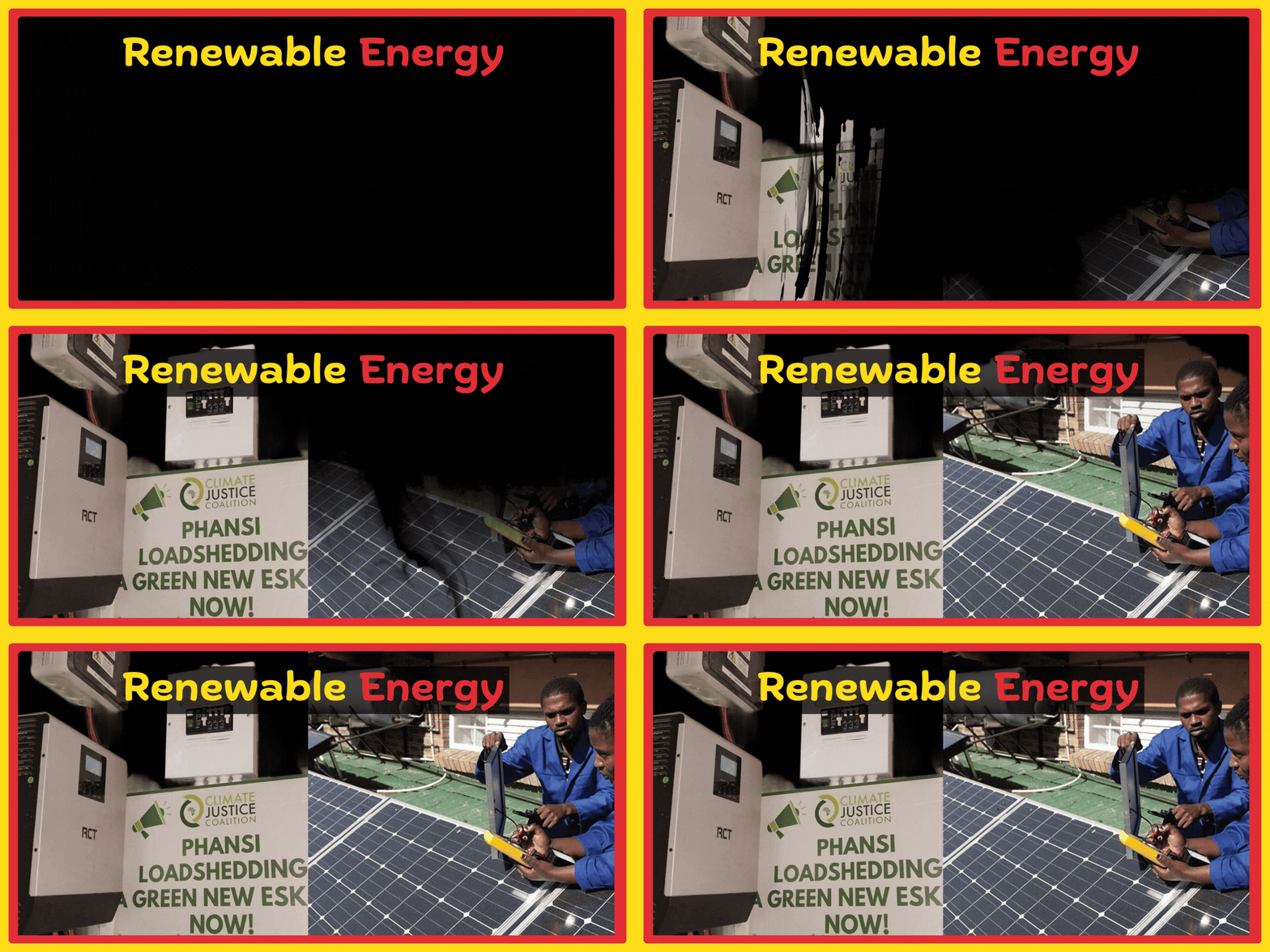
Setting up solar power systems, both residential and commercial, requires technicians and installers.
- Operation and Maintenance
Solar farm maintenance:
Regular maintenance of solar farms, including cleaning panels and troubleshooting equipment, provides ongoing employment.

What is solar energy?
The sun is an incredible and renewable resource that has the power to fuel life on earth and provide clean, sustainable energy to all of its inhabitants.
In fact, more energy from the sun reaches our planet in one hour than is used by the entire population of the world in one year. The sun’s energy can be converted into electricity through solar photovoltaic (PV) modules (photo = light, voltaic = electricity).
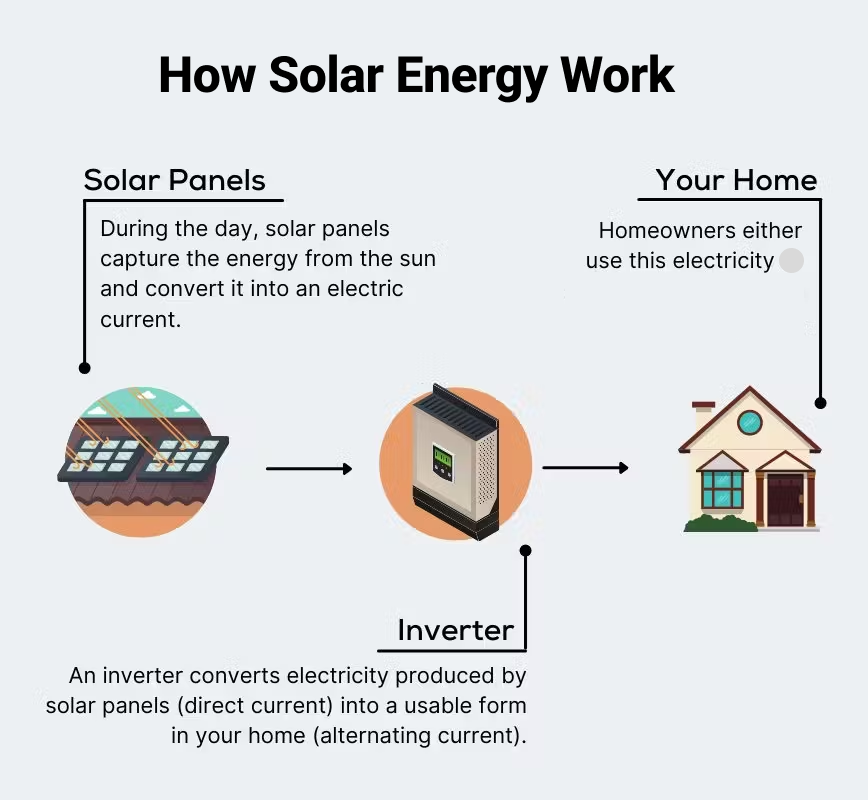
How does solar energy work and why should we use solar energy?
PV modules absorb sunlight and convert the energy into a usable form of electrical current.
The sun shines all over the world, making solar electricity viable anywhere. Because solar can be paired with batteries for energy storage, solar electric systems can be independent of the utility grid, making them cost-effective for remote locations. Solar modules have no moving parts making maintenance costs low, and they are highly reliable with a long service life of 25+ years of guaranteed electricity.
Solar electricity relies on the sun as its fuel source, so there is no need to drill for petroleum-based fuels, refine them, or deliver them to the site. As you can see, there are a lot of advantages of solar energy.
Clean Renewable Energy Resource